
How to Buy a Franchise in India
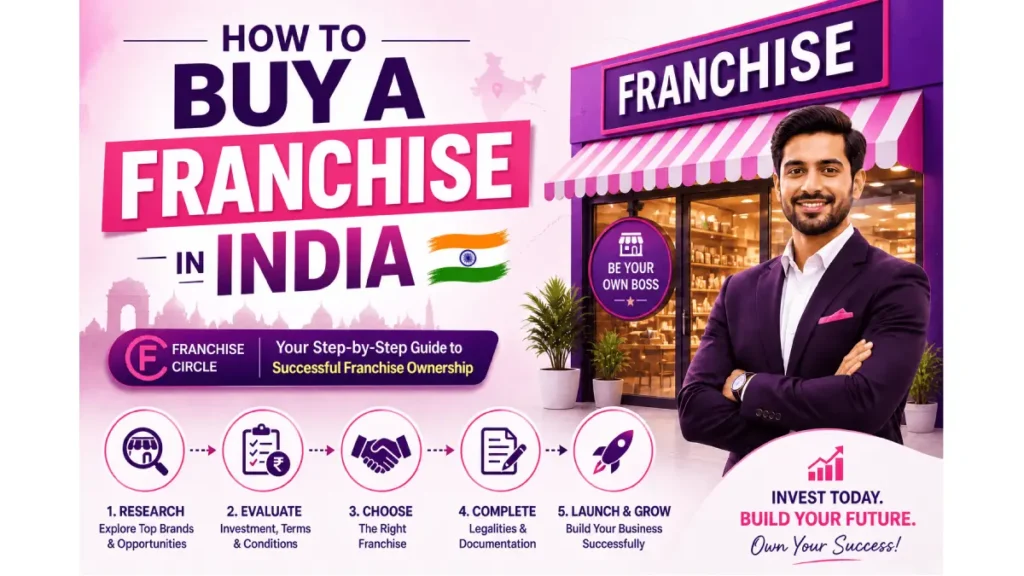
If you have been searching for a clear, practical guide on how to buy a franchise in India, you are in the right place. This step-by-step resource covers everything a first-time investor needs to know, from understanding what franchising is, to choosing a brand, reading the agreement, and launching your outlet with confidence.
India's franchise industry is expanding rapidly. Industry estimates place the market on track to cross $140 billion by 2026, fueled by a growing middle class, rising entrepreneurial ambition, and established brands actively seeking partners to scale nationwide. Cities like Noida, Delhi, Mumbai, Pune, and Bengaluru are leading this growth, with new outlets opening across food and beverage, education, beauty, health, and retail every month.
Whether you have Rs 5 lakhs or Rs 50 lakhs to invest, there is a franchise opportunity in India suited to your budget. What matters most is that you go in with the right knowledge.
What You Will Learn in This Guide
- What is a franchise and how does it work in India
- Choosing the right business model for your budget and goals
- How to research and shortlist brands
- Understanding the fee structure and total investment
- How to read and evaluate a franchise agreement
- Legal and compliance checklist before you sign
- How to launch your outlet successfully
- Frequently asked questions
1. What Is a Franchise and How Does It Work in India?
A franchise is a licensed business model in which a parent company, called the franchisor, grants an individual or a company, called the franchisee, the rights to operate under its brand, use its systems, and sell its products or services. In return, the franchisee pays an upfront fee and ongoing royalties.
In India, this arrangement is governed by the Indian Contract Act, 1872, and the Competition Act, 2002. There is no standalone franchise legislation in India, which means the terms of your agreement carry full legal weight. Reading every clause carefully is not optional.
The three most common models you will encounter are:
Single-Unit Franchise
You own and operate one outlet in a defined territory. This is the best starting point for first-time franchise investors in India.
Multi-Unit Franchise
You operate multiple outlets across a larger area, usually with staggered opening timelines. Requires more capital and stronger management capacity.
Master Franchise
You acquire sub-franchising rights for an entire city, state, or region and recruit other investors under you. This is an advanced model suited for experienced entrepreneurs.
For most people exploring how to buy a franchise in India for the first time, a single-unit model is the safest entry point. It keeps capital requirements manageable and gives you real operational experience before expanding.
2. Choosing the Right Business Model for Your Budget and Goals
Before approaching any brand, you need clarity on three things: your available capital, the industry you want to enter, and the city or locality where you plan to operate.
Investment Ranges for Franchise Business in India
| Investment Range | Type of Business | Examples |
|---|---|---|
| Under Rs 5 Lakhs | Home-based, kiosk, service | Coaching, courier, insurance |
| Rs 5 to 20 Lakhs | Small retail, food kiosk, edtech | i-Maths, Skill Circle, small cafes |
| Rs 20 to 50 Lakhs | Salon, wellness, mid-size food | Lakmé Salon, HairMaster, Looks |
| Rs 50 Lakhs and above | Premium retail, restaurant chain | Established QSR brands, large format |
Location plays a major role in how quickly you recoup your investment. Investors operating in Delhi NCR, Noida, or Gurgaon benefit from high-density populations and strong purchasing power. If you are looking for low investment franchise opportunities in Delhi NCR, these markets offer faster ROI timelines compared to smaller cities.
Tier-2 and tier-3 cities offer lower real estate costs and less competition, but require brands that are actively targeting those markets.
Are you ready to explore verified franchise opportunities matched to your budget? Talk to a franchise expert at Franchise Circle for free
3. How to Research and Shortlist Franchise Brands
Once your budget and industry are decided, the next step is building a shortlist of brands worth pursuing. Do not rush this stage. The brand you choose will shape your daily work and financial returns for the next 3 to 5 years.
- Use a verified franchise marketplace. Platforms like Franchise Circle list pre-vetted brands that have already cleared legal and financial checks, saving you weeks of individual research.
- Check the brand's existing network. How many outlets are currently operating? Are existing partners satisfied? Ask to speak with at least two or three active franchisees before committing.
- Assess their support system. Does the brand offer training, marketing assistance, and operational guidance? A brand that disappears after the deal closes is a serious red flag.
- Evaluate their digital presence. A brand with a weak online presence will be harder to promote locally, which directly affects your footfall and revenue.
- Attend industry expos. Events like the Franchise India Expo give you direct access to brand representatives and the ability to compare multiple opportunities in one place.
Important: Always ask the brand for a financial disclosure document before signing anything. Credible brands share this openly. Those that refuse to provide transparent financial data before the agreement stage should be approached with caution.
Want to skip the research grind? Browse pre-verified franchise brands on Franchise Circle and find your match today.
4. Understanding the Franchise Fee, Royalty, and Total Investment
One of the most common mistakes first-time franchise investors in India make is calculating only the upfront brand fee and overlooking the full cost of starting operations. Here is a complete breakdown of what you are actually paying:
Franchise Fee
A one-time upfront payment for the right to use the brand name and its operating systems. In India, the franchise fee typically ranges from Rs 1 lakh to Rs 20 lakhs depending on the brand and territory.
Royalty Fee
A recurring payment to the parent brand, usually 4 to 8 percent of monthly revenue, or a fixed monthly amount in some cases. This continues for the full duration of your agreement.
Setup and Infrastructure Cost
Interior fit-out, equipment, furniture, signage, and technology. This is often the single largest cost component of any franchise investment in India.
Working Capital
Cash reserves to run operations for the first 3 to 6 months before the business reaches break-even. Never skip this in your budget planning.
Marketing and Launch Cost
Local promotional costs, grand opening events, social media advertising, and printed materials. Some brands contribute to this, others leave it entirely to the franchisee.
Always ask the brand for a written investment disclosure that covers all five categories. A transparent and serious brand will provide this without hesitation.
5. How to Read and Evaluate a Franchise Agreement in India
The franchise agreement is the most critical document in the entire process of how to buy a franchise in India. It defines your territory, rights, obligations, term length, renewal conditions, and exit options. Never sign without having a qualified lawyer review every clause.
Territory Exclusivity
Are you the sole operator in your area, or can the brand open a competing outlet nearby? Exclusive territory rights protect your investment and are worth negotiating for.
Agreement Term and Renewal
Most franchise contracts in India run 3 to 5 years. Understand the renewal conditions and whether the franchise fee or royalty increases at renewal time.
Performance Targets
Some brands include mandatory monthly or annual revenue targets. Missing them may trigger penalties or early termination of your agreement.
Exit and Transfer Clause
If you want to sell or exit the business before the term ends, what is the process? Are there financial penalties or approval requirements from the franchisor?
Intellectual Property Rights
You are licensing the brand name, not owning it. Know exactly what you can and cannot do with the brand's logo, name, and marketing materials.
Dispute Resolution
Which court or arbitration body has jurisdiction if a disagreement arises? This matters more than most investors realize at the time of signing.
6. Legal and Compliance Checklist Before You Sign
Complete these steps before committing any money or signing any document:
- Register your business entity. A Private Limited Company or LLP offers better liability protection than a sole proprietorship.
- Apply for GST registration, required for billing and tax compliance in most business categories across India.
- Verify trademark registration. Check that the brand's trademark is registered with the Controller General of Patents, Designs, and Trade Marks (CGPDTM). An unregistered trademark gives you no legal protection.
- Obtain FSSAI license if you are entering the food and beverage sector, before operations begin.
- Check your premises agreement. Ensure your lease or rental contract is in your name, not only in the parent brand's name.
7. How to Launch Your Franchise Outlet Successfully
Once the agreement is signed and the setup is complete, your focus shifts entirely to a strong opening. Experienced franchise investors in Noida and Delhi recommend the following:
- Plan a grand opening campaign using WhatsApp broadcasts, Instagram reels, and local area promotions at least two weeks before launch day.
- Train every team member fully before opening day. The customer experience in your first 30 days defines word-of-mouth reputation for months.
- Set up your Google Business Profile immediately. Most customers in Noida, Gurgaon, and Delhi NCR discover local businesses through Google Maps before visiting in person.
- Track weekly revenue against your break-even numbers from day one. Early adjustments are far easier than course-correcting after months of losses.
- Stay in regular contact with the brand's support team. Their experience with other outlets helps you avoid common early operational mistakes.
Looking for verified franchise opportunities in Delhi NCR? Franchise Circle connects investors in Noida, Delhi, and Gurgaon with pre-vetted brands across food, beauty, education, and wellness. Our consultation is completely free.
Final Thoughts
Understanding how to buy a franchise in India does not require years of business experience. What it requires is patience, thorough research, honest self-assessment of your budget, and the discipline to read every document before signing anything.
The investors who thrive are those who choose the right brand for their market, ask the hard questions early, and maintain a close working relationship with the parent brand after signing. The deal itself is just the beginning.
At Franchise Circle, based in Sector 62, Noida, we help investors across India find the right brand match based on their budget, industry interest, and preferred location. Every brand on our platform is pre-verified for legal compliance and financial credibility.
Book your free consultation at Franchise Circle today and take the first step toward owning a proven business in India.
Frequently Asked Questions
How much money do I need to buy a franchise in India?
The minimum investment to buy a franchise in India starts from as low as Rs 1 to 2 lakhs for home-based or kiosk models. Most retail or salon outlets need between Rs 10 lakhs and Rs 50 lakhs. Your total budget must cover the brand fee, outlet setup, working capital for the first six months, and initial marketing costs.
Is buying a franchise in India a good investment?
Yes, it is generally a lower-risk business path compared to starting from scratch. You inherit a tested brand, an established operating system, and ongoing franchisor support. Success depends on choosing the right brand, picking a strong location, and running operations consistently from day one.
What is a franchise fee in India?
A franchise fee is a one-time upfront payment that gives you the right to operate under the parent brand's name and systems. In India, this fee typically ranges from Rs 1 lakh to Rs 20 lakhs, depending on the brand's size, reputation, and the exclusivity of the territory you receive.
Do I need a lawyer before signing a franchise agreement in India?
Yes, absolutely. India has no dedicated franchise legislation, so the agreement governs every aspect of your rights and obligations. A lawyer will help you identify unfair territory clauses, hidden royalty structures, termination penalties, and any terms that could disadvantage you over the contract's duration.
Which type of franchise is best for beginners in India?
Service-based and education-sector businesses are often the easiest starting points for first-time investors due to lower capital needs and simpler daily operations. In cities like Noida and Delhi NCR, beauty salon and food kiosk models also deliver solid returns because of consistent consumer demand and high footfall.
How long does it take to recover my investment in a franchise in India?
Service and education outlets typically break even within 12 to 18 months. Food and beverage businesses usually take 18 to 30 months. Choosing a high-footfall location in a city like Noida, Gurgaon, or Delhi significantly reduces your time to break-even compared to smaller markets.
What is the difference between a franchise and a distributorship in India?
A franchise grants you the right to operate under a brand's full identity, including its name, systems, staff training, and customer experience standards. A distributorship only allows you to sell the brand's products in a territory, with no brand-level identity or operational support. The two serve entirely different business goals.